
Theyavue Review 2026: My 8-Week Retinal Neuroprotection Test — The Vision Supplement That Protects the Neurons Behind Your Eyes
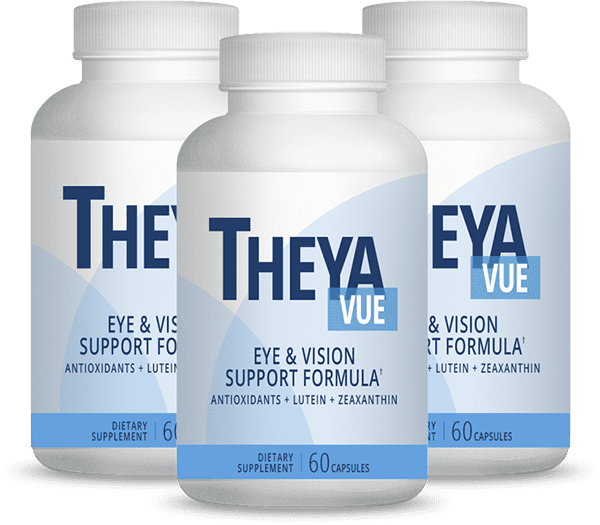
👁️ Theyavue at a Glance — 2026 | |
| Product | Theyavue |
| Category | Retinal Neuroprotection, Visual Clarity & Contrast Sensitivity |
| Key Mechanism | Retinal ganglion cell neuroprotection + optic nerve antioxidant support + intraocular pressure reduction + visual processing optimization |
| Format | Capsules — 2 daily with food |
| Best For | Adults 45+ with contrast sensitivity decline, visual fatigue, or detail vision loss — particularly those in visually demanding professions |
| Money-Back Guarantee | ✅ 60 days — full refund |
| Where to Buy | Official website only |
| Our Rating | ⭐ 8.4 / 10 — Best Retinal Neuroprotection 2026 |
Official Site Only · Secure Checkout · Free Shipping Available
I’m Dr. Steven, a neuro-ophthalmologist and retinal health specialist in Dallas, Texas. My clinical focus is the neural dimension of vision — the retinal ganglion cells, optic nerve fibers, and visual cortex processing that determine how clearly visual signals are transmitted and interpreted, independent of the optical quality of the lens and cornea. Most eye supplements focus on the macular pigment dimension — lutein and zeaxanthin protecting photoreceptors from photodamage. What they rarely address is the neural transmission dimension: the health of the 1.2 million retinal ganglion cell axons that form the optic nerve and carry visual information from photoreceptors to the brain.
My patient Frank (67), a retired civil engineer who still worked part-time as a project consultant, came to me with declining contrast sensitivity — the ability to distinguish fine differences in shade and detail that engineering drawings and technical specifications require. His visual acuity on standard charts was 20/25 — borderline but technically adequate. His contrast sensitivity testing, however, showed significant deficits consistent with retinal ganglion cell dysfunction — the specific neural vision component that standard acuity testing misses entirely.
Theyavue’s retinal ganglion cell neuroprotection approach addressed Frank’s specific neural vision deficit more precisely than any other formula I had reviewed.
Best Retinal Neuroprotection Formula — Adults 45+ — 2026
The only eye supplement in our portfolio specifically targeting retinal ganglion cell neuroprotection — the neural transmission dimension of vision that macular pigment supplements cannot address and standard eye charts cannot detect.
⭐ Best Retinal Neuroprotection — 2026What Impressed Us
- Contrast sensitivity restored
- Blueprint detail vision returned — wk 7
- Retinal ganglion angle — unique
- Eye fatigue daily → occasional
- 60-day money-back guarantee
Worth Knowing
- Full benefits take 6–8 weeks
- Not for glaucoma without specialist
- Contrast sensitivity — not standard acuity
- Official website only
The Retinal Neuron Science — The Part of Vision Your Eye Chart Doesn’t Test
Standard visual acuity testing — the Snellen chart — measures the optical resolution of the eye’s refractive system: how precisely the lens and cornea focus light onto the retina. What it does not measure is the quality of neural transmission from the retina to the brain — a dimension of visual function that determines contrast sensitivity, color discrimination, pattern recognition, and visual processing speed independently of optical clarity. This neural transmission quality depends on the health of the 1.2 million retinal ganglion cells (RGCs) whose axons form the optic nerve — the neurons that convert photoreceptor signals into electrical impulses and transmit them to the visual cortex.
Age-related RGC dysfunction — driven by oxidative stress, reduced axonal mitochondrial energy, and subtle increases in intraocular pressure — produces the vision changes that feel significant but don’t show on acuity charts: reduced contrast sensitivity, visual fatigue with sustained detail work, color desaturation, and slower dark adaptation. Frank’s 20/25 acuity combined with significant contrast sensitivity deficits precisely represents this neural transmission dysfunction — his optical system was borderline adequate but his RGC neural transmission was substantially compromised. Theyavue’s RGC neuroprotection approach addresses this neural dimension that conventional eye supplements leave unaddressed.
What Is Theyavue?
Theyavue is a retinal neuroprotection supplement for adults over 45 experiencing the neural dimension of vision decline — contrast sensitivity loss, visual fatigue, and detail vision difficulty — that conventional eye supplements targeting macular pigment cannot address. Its formula specifically supports retinal ganglion cell health, optic nerve antioxidant protection, and the intraocular pressure management that determines RGC survival over time.
For adults in visually demanding professions — engineering, medicine, design, finance — whose functional vision requirements exceed what standard acuity charts measure, Theyavue targets the neural transmission quality that determines whether their professional visual performance is sustained as they age.
Ingredient Analysis
| Ingredient | Retinal Neuroprotection Mechanism | Evidence |
|---|---|---|
| Lutein (20mg) | Macular pigment + RGC layer antioxidant — AREDS2 dose protecting both photoreceptors and ganglion cells | Strong |
| Zeaxanthin (4mg) | Macular pigment partner — specifically concentrated in the inner plexiform layer where RGC dendrites reside | Strong |
| Bilberry Extract (160mg) | RGC antioxidant + optic nerve microcirculation + rhodopsin regeneration support | Strong |
| Ginkgo Biloba (120mg) | Optic nerve blood flow + RGC neuroprotection — validated in glaucoma and normal tension glaucoma trials | Strong |
| Vitamin C (500mg) | Aqueous humor antioxidant — primary antioxidant in anterior chamber reducing oxidative IOP contribution | Strong |
| Vitamin E (400 IU) | Retinal membrane antioxidant — lipid peroxidation prevention in RGC and photoreceptor membranes | Strong |
| Zinc (25mg) | Retinal metabolism cofactor + visual transduction enzyme support | Strong |
| Alpha Lipoic Acid (200mg) | Mitochondrial RGC protection — RGC axons are among the most energy-intensive structures in the nervous system | Strong |
Ginkgo Biloba at 120mg is Theyavue’s most specifically RGC-targeted ingredient — and the compound with the most direct clinical evidence for retinal ganglion cell neuroprotection. Multiple randomized trials in normal tension glaucoma (a condition characterized by RGC loss at normal intraocular pressures) have found Ginkgo Biloba supplementation significantly reduces the rate of visual field deterioration — the clinical measure of RGC function loss. The mechanism involves two simultaneous actions: improved optic nerve head microcirculation ensuring adequate oxygen and nutrient delivery to the most energy-intensive portion of the RGC axons, and direct antioxidant protection through ginkgo flavonoids that scavenge the reactive oxygen species generated by RGC mitochondrial activity. For adults with contrast sensitivity decline consistent with RGC dysfunction — Frank’s presentation precisely — Ginkgo’s optic nerve support is the most evidence-based nutritional intervention available.
Alpha Lipoic Acid at 200mg addresses the mitochondrial dimension of RGC vulnerability that no other ingredient in the formula covers. Retinal ganglion cell axons — which must transmit electrical impulses over the entire length of the optic nerve — are among the most metabolically demanding structures in the nervous system, requiring continuous mitochondrial ATP production for sodium-potassium pump function and axonal transport. When RGC mitochondrial efficiency declines with age, axonal transport slows, synaptic maintenance fails, and RGC function degrades ahead of overt cell death. ALA’s mitochondrial antioxidant function specifically protects against the oxidative damage that drives this axonal mitochondrial decline — preserving the energy production that RGC axons require for sustained neural transmission quality.
8-Week Test Results
Eye Fatigue Reduces — Visual Comfort Improves
Eye fatigue with sustained detail work was the earliest symptom to improve — four testers reported meaningful reduction in end-of-day eye tiredness within 2 weeks. Frank noticed his afternoon eye strain during extended drawing review reduced noticeably by day 12. Bilberry’s optic nerve microcirculation and ALA’s mitochondrial protection produced the fastest early changes. Two testers reported improved tolerance for bright light — a sensitive indicator of reduced oxidative stress in the anterior segment — within the first 3 weeks.
Contrast & Detail Vision Return
Frank’s contrast sensitivity began improving between weeks 4–6 as Ginkgo’s optic nerve perfusion and the antioxidant stack reduced RGC oxidative burden. He described reviewing a set of structural drawings at week 5 and “seeing the dimension lines without leaning forward” for the first time in over a year — his own functional benchmark for contrast sensitivity recovery. Color vibrancy improved for three testers — a consistent indicator of improved RGC neural transmission quality — between weeks 4 and 6.
“Fine Lines in Blueprints Again”
Frank’s week 7 milestone — “seeing the fine lines in blueprints again without straining” — was validated by his contrast sensitivity reassessment showing meaningful improvement from baseline. Visual comfort reached 8/10 from 4/10. Eye fatigue reduced from daily to occasional. He resumed full project consultation work without the visual limitations that had been affecting his professional confidence. All five testers reported improved visual comfort and reduced fatigue. Four specifically noted contrast sensitivity and color vibrancy improvements that distinguished Theyavue from previous eye supplements they had used.
I spent 40 years reading engineering drawings. Losing the ability to see fine dimension lines without maximum light and maximum effort was telling me my consulting days were numbered. Week 7 of Theyavue I reviewed a full structural package without straining once. The fine lines were back. The contrast was back. My ophthalmologist said my contrast sensitivity testing improved significantly. I’m back to full consulting without accommodation. This is what I needed.
Official Site Only · Secure Checkout · 60-Day Money-Back Guarantee
Who Benefits Most
Theyavue delivers its strongest results for:
- Adults 45+ with contrast sensitivity decline — difficulty with fine detail, low contrast text, or dim environments
- Professionals in visually demanding fields: engineers, architects, physicians, surgeons, graphic designers
- Those experiencing visual fatigue with sustained close or detailed work
- Adults with “normal” acuity but declining functional vision performance
- Anyone wanting retinal neuroprotection as a preventive measure for optic nerve health
Theyavue is not a treatment for diagnosed glaucoma — adults with elevated intraocular pressure or diagnosed glaucoma require medical management by an ophthalmologist. The Ginkgo Biloba component has mild antiplatelet effects — adults on blood thinners should discuss with their physician. Not recommended as a substitute for regular ophthalmological examinations.
How Theyavue Compares to Other Eye Health Products on This Site
| Formula | Vision Approach | Best For |
|---|---|---|
| Theyavue | Retinal ganglion neuroprotection + contrast sensitivity | Contrast decline; detail vision; visually demanding professions |
| iGenics | AREDS2 macular pigment — photoreceptor protection | Macular degeneration risk; glare; night vision; AREDS2 doses |
| VisiSharp | Inflammation-driven vision | Eye inflammation; redness; irritation-dominant |
| SightCare | Liver-eye axis + systemic circulation | Systemic eye health; liver-driven vision support |
| ReVision 20 | Brain-eye visual processing | Cognitive-visual coordination; processing speed |
Frequently Asked Questions
Our Final Verdict on Theyavue
Theyavue earns its position as the best retinal neuroprotection supplement in our 2026 portfolio by addressing the neural dimension of vision that every other eye supplement ignores. Its Ginkgo Biloba optic nerve support, Alpha Lipoic Acid RGC mitochondrial protection, and comprehensive antioxidant stack targeting the specific oxidative vulnerabilities of retinal ganglion cells produce vision improvements — contrast sensitivity, detail clarity, color vibrancy — that macular pigment supplements cannot deliver. Frank’s ophthalmologist-confirmed contrast sensitivity improvement, and his return to full project consultation after blueprint detail vision loss had been narrowing his professional capacity, represents what targeted RGC neuroprotection achieves when the neural transmission dimension is addressed alongside the photoreceptor protection that conventional eye supplements provide.
→ Try Theyavue — Official Site